From Madagascar to Arnhem Land in Australia’s north and Bougainville in Papua New Guinea, MAF has been responding when extreme weather events have left communities isolated and in need.
Cyclone Narelle: Evacuations and food relief in Arnhem Land
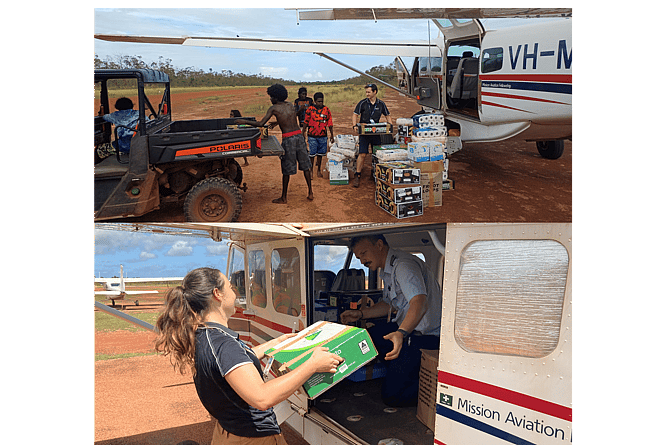
When Tropical Cyclone Narelle made landfall in Arnhem Land in Australia’s Northern Territory earlier this year, MAF planes were kept busy making evacuation flights for more than 70 residents from the Laynhapuy homelands to the safety of cyclone shelters in Nhulunbuy.
After the cyclone passed, residents were safely returned home. However, damaged tracks and depleted fuel supplies soon created another crisis, with several homelands running out of food. In response, MAF flew 1.7 tonnes of food supplies to some of the worst-affected communities.
“MAF flew the food out to these homelands over [a] couple of weeks and helped distribute it on the ground,” said Ashleigh Ayres from Laynhapuy Homelands Aboriginal Corporation.
Using five planes over three days, MAF pilots, operations staff and volunteers loaded and delivered hundreds of kilograms of food to isolated communities cut off by flooded roads.
STORY / JANNE RYTKONEN PHOTOS / RHETT GRIFFITHS & ETHAN MCMASTER
The Laynhapuy Homelands are a group of small, remote communities of Yolŋu people living on their traditional lands. The homelands are scattered across an area of some 30,000 square kilometres across East Arnhem Land.
Cyclone Maila: Rapid response in Bougainville
In the wake of Tropical Cyclone Maila, the people of the Autonomous Region of Bougainville faced flooding, washed out bridges, damaged food gardens and dangerously high seas.
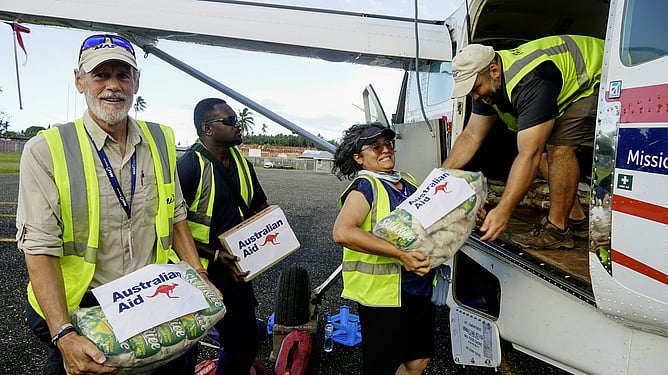
“The effect of the cyclone is very bad and has caused damage to nearly all of Bougainville,” said Rev Abraham Toroi, Bishop Emeritus of the United Church in Bougainville. “Bridges have been washed out, causing no travel at this time and many people became stranded.” MAF had only recently returned to Bougainville to launch aviation and technology initiatives when the cyclone struck. The team had to respond rapidly, carrying out a three-week operation that included 77 flights, 59 flight hours, nearly 300 passengers transported and approximately 17 tonnes of humanitarian cargo delivered.
John Woodberry, who leads MAF’s work in Bougainville, said the team flew food, medical supplies and essential aid to communities including Nissan Island, Buin and Arawa, while also conducting medical evacuations. MAF also supported government and emergency responders by conducting aerial surveys to assess damage to roads, rivers and bridges. “Basically, we were there to serve and help in any way we could,” John said.
The Australian and New Zealand governments provided aid supplies and supported MAF with funding to transport relief from Buka to affected communities with small airstrips.
STORY & PHOTO / AQUILA MATIT
Cyclone Gezani: Supporting recovery in Madagascar
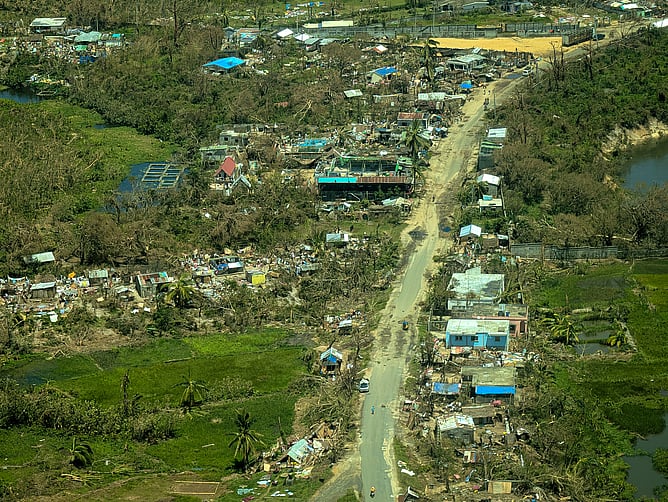
Thousands of kilometres away, Cyclone Gezani devastated Toamasina on Madagascar’s east coast, flattening homes and severely damaging infrastructure.
To support the response, MAF flew in emergency teams from Medair, a Christian humanitarian organisation that assists vulnerable communities affected by conflict, disease and disasters.
“Travel by road isn’t an option in this kind of emergency,” said Rajaonirina Keng Laricha, Medair Communications Officer. “We’ve been working with MAF for years. As Christian organisations, we want to reach those who are hardest to reach, and MAF makes that easier.”
Over six weeks, Medair distributed hygiene kits, essential household items and cash assistance to affected families. In Toamasina, 23,847 households were declared disaster areas and 2442 people had to abandon their homes.
“This house collapsed completely, so we moved uphill to another shelter but that one collapsed too,” said cyclone survivor Flogèle Bruchard. “We kept moving from one house to another, four times in total, and each one fell.”
Throughout the response, MAF enabled Medair teams to travel quickly into and out of the disaster zone, helping vulnerable families begin the long process of rebuilding.
STORY & PHOTO / ANTSATIANA GINO RADRIANSOLO
From evacuations and food drops in Arnhem Land, to humanitarian relief in Bougainville and emergency aid in Madagascar, MAF continues to bring help, hope and healing when disasters leave communities isolated and in need.
EDITED BY ELEANOR RIVERS
This story was originally published in "Flying for Life - Winter 2026." To view the full issue, click here.