Mission Aviation Fellowship has spent decades working in some of the world's most remote regions, using light aircraft to bring help, hope and healing and connect isolated people to the outside world. But why do people live in such far-flung places, and is it a choice they make?
Papua New Guinea
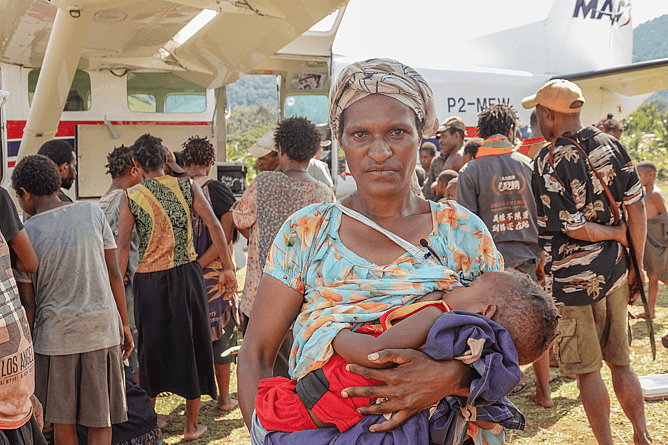
Craggy mountain peaks and steep river gorges surround Sikoi, a small village in Papua New Guinea. There are no roads to the nearest town, and when a child contracts severe asthma, village health workers quickly run out of treatment options.
“It would take three days’ walk to reach a road, plus an extra day for stops along the way,” said Ani Aipe, a mother of four whose daughter Iprio was saved by an MAF flight.
For Iprio, those four days of walking would have been fatal. Instead, MAF responded with a medical evacuation.
A 19-minute flight over the mountains brought hope to a hopeless situation, and Ani’s daughter survived.
Iprio’s story illustrates the effects of isolation by explaining why Ani’s family and millions like them living in isolation is not as simple. Reasons range from cultural connections to ancestral land and self-sufficiency, to a lack of financial means or skills needed to live in urban centres.
Papua New Guinean cashcroppers from the mountainbound Karimui district are typical of remote tribal people who subsist on ancestral lands owned by their families and clans. Though far from towns, these lands are the foundation of their livelihoods.
Sixty-year-old Job Pusi is from the community of Manu in the Karimui area, a five-day walk from the nearest town of Kundiawa.
“We rely on our land for food and fresh water from the creeks and rivers to sustain our livelihoods,” he said.
“For us Papua New Guineans, land is important, as we rely on our land to plant cash crops. Land is our life. Whether it is in the jungle or on an island, it does not matter if it is our land. This is the land where our mothers gave birth to us, and this is where we belong.”
Though they live in isolation, MAF flights connect them with income, education and healthcare.
Arnhem Land
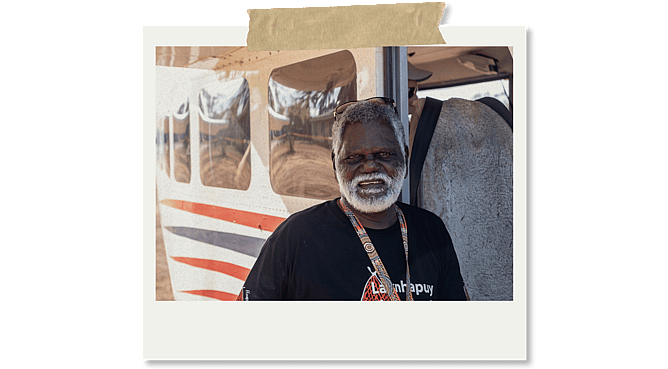
In contrast, the indigenous Yolŋu people in Australia’s Arnhem Land spent several decades in larger communities and townships away from their land.
However, when drugs and alcohol began to flow into the region with the influx of mining royalties in the 1970s, the Yolŋu chose to move into isolation to protect their youth.
They established a homeland movement in 1975 and, with significant support from MAF, departed larger communities to resettle ‘on country’ in their traditional family and clan groups.
Yolŋu elder Barayuwa Mununggurr said, “It was self-determination, and Yolŋu mala (group) decided to make control of their own future.
“MAF has been so involved in the movement, taking people back to their homelands and just before then, when they had to clear the airstrips for the planes to land.
“All of that, MAF was part of it.”
Even when isolation appears to be a choice, it is usually predicated on an absence of viable alternatives for survival, rather than calculated agency.
Kenya
In Africa, the semi-nomadic Maasai across Kenya and Tanzania are still mostly dependent on cattle for their livelihood.
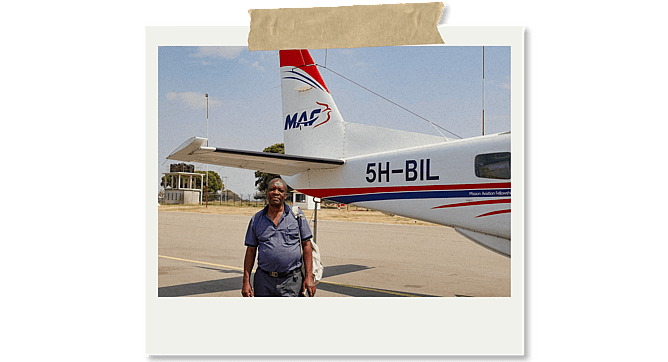
Dr Erick Msigomba is an eye doctor who flies with MAF to remote communities to provide sightrestoring surgeries.
“The Maasai are cattle keepers,” Dr Erick said. “People live in isolation because they are looking for affordable land, especially those who keep livestock.
“They need large areas of land to graze their animals, so they cannot stay in towns where there is not enough space to feed cattle, goats, and sheep.”
For people living cut off from towns in the world’s most remote places, the sight of a MAF aircraft is much more than transport. It is a promise of connection that breaks through the barriers of isolation to save lives, bring new life and provide new opportunities for livelihoods.
STORY / JANNE RYTKONEN PHOTOS / AQUILA MATIT, JANNE RYTKONEN & ANNET NABBANJA
This story was originally published in "Flying for Life - Spring 2026." To view the full issue, click here.