South Sudan is home to the White Nile, which joins the Blue Nile in Sudan to form the world's longest river.
The surrounding area forms a vast drainage basin that passes through 11 countries, covers around 3.2 million km, and is home to over 257 million people.
Approximately 90% of South Sudan’s landmass lies within this basin. In recent years, climate change and the complex hydrology of the Nile system have left an increasing number of people vulnerable to flooding. In 2024 alone, 735,000 people in 38 counties were displaced by floods.
Flooding has sadly become a regular occurrence. Since 2012, Nile Basin Discourse has worked in South Sudan to help communities understand and manage water and natural resources.
The Nile Basin Discourse is a network of hundreds of organisations working towards environmental conservation, agriculture, energy, gender equity, livelihood and poverty reduction.
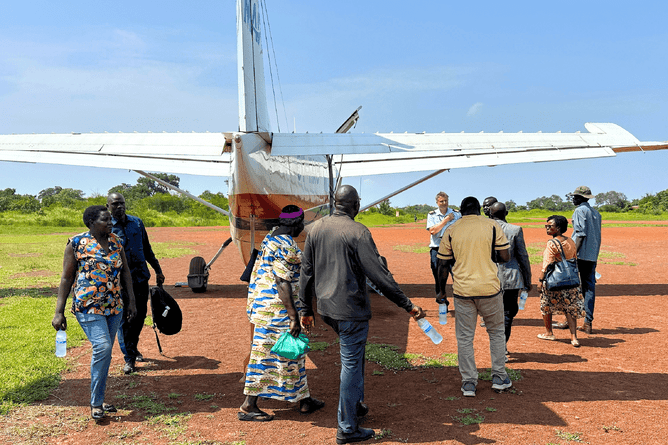
MAF flew a Nile Basin Discourse team, including environmental and social specialist Patricia Gibril Ali, from Mundri, one of the affected communities.
“Mundri happens to be in the Bahr al Jabal basin, which is one of the major basins that feed into the Nile,” said Patricia.
“We came here because there is a history of flooding in Mundri. We’ve come to enlighten the community and raise awareness about early warning signs for floods. We intend to establish a hydrometric station.
We are also engaging the community and sharing information about the importance of early warning systems and other climate change issues,” said Patricia.
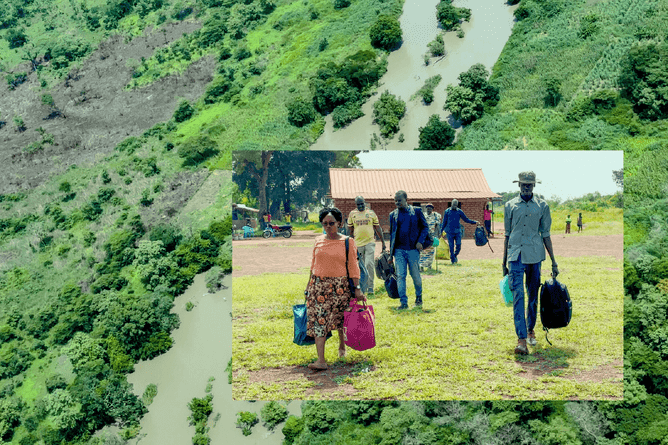
In 2022, severe flooding displaced 29,796 people and washed away the bridge over the Mori River, halting traffic on the main road to Juba and stranding trucks on both sides of the river.
In September 2023, more than three thousand people were displaced when rivers burst their banks across three administrative regions.
By the end of that same month, another 1,530 people—more than 500 households—were forced to leave their homes after heavy rains caused further flooding. Contaminated water sources posed a health risk, schools were closed, and a few weeks later, another local bridge was washed away, cutting off several communities and stranding an ambulance.
“According to the communities, the flooding can reach as far as three kilometres, damaging crops and homes,” Patricia said.
She noted that in rural communities like Mundri, where most people rely on subsistence farming, flooding devastates both livelihoods and homes. The team hoped to help the community prepare before the arrival of the rainy season.
“This visit is timely,” Patricia added. “It’s about letting communities know what the government and partners like the Nile Basin Discourse Forum are doing to provide early warning information.
This helps us all plan for future disasters. The visit is one of several interventions aimed at helping the community adapt to the current climate challenges they’re facing.
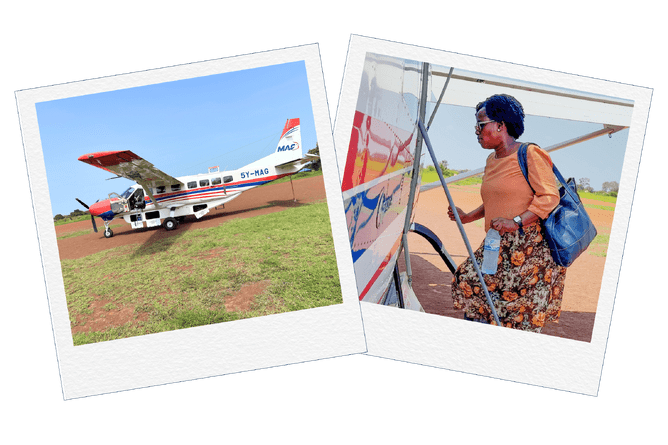
“We thank MAF for their service and partnership in our programmes. Without MAF, it wouldn’t have been possible for us to come here, especially when the political situation in the country made it difficult,” she said.
“We appreciate MAF for what they’re doing across the nation of South Sudan,” he said.
“There are some remote areas that commercial flights can’t reach, but MAF is able to serve our communities. This is a wonderful service—we appreciate everyone supporting MAF’s work. May God bless you.
“With all the financial challenges the world is facing today, we pray that support for MAF will continue so that they can keep supporting communities like ours.”
STORY & PHOTOS / JENNY DAVIES