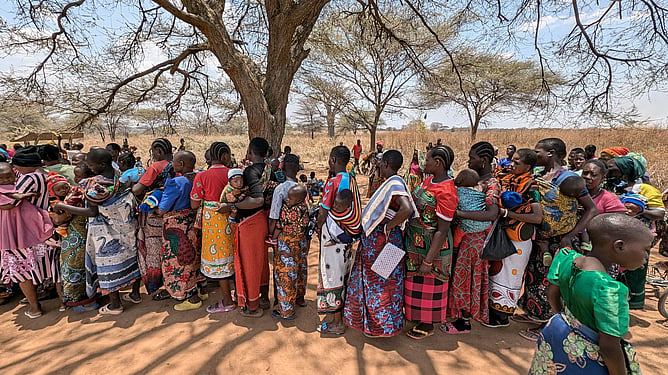
MAF will exit Tanzania later this year in response to significant development across the country and shifting global priorities.
As MAF begins to transition out of Tanzania in the coming months, the country today is in far better shape than when MAF first started serving there over 60 years ago.
In 1963, life expectancy was a dismal 44 years – today it’s 70. In the last 25 years, maternal mortality has drastically reduced by 71%, and primary school enrolment has boomed to 93% since the government introduced free basic education in 2015.
The electrification rate has reached 69% across rural areas (source: Int’l Trade Administration) and in May, the Tanzanian Government unveiled plans to invest nearly US$965 million in roads, bridges and motorways, which will vastly improve connectivity across the country (source: Global Highways).
Local aviation has also grown over the years, which has seen demand for MAF flights fall, leading to the programme downsizing in 2014.
As Tanzania developed over the last six decades, MAF played a significant part in serving isolated communities both physically and spiritually.
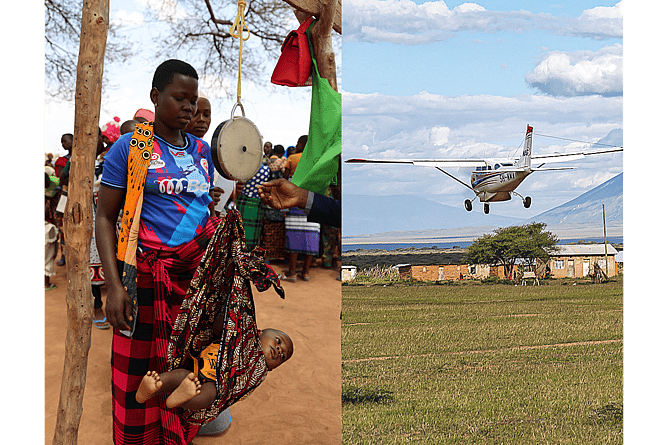
For over 40 years, MAF’s mobile medical clinics have treated thousands of women and children in remote areas, saving untold lives. Every month, MAF has joined forces with either Haydom Hospital, Kilimatinde Hospital or Same Hospital, flying a tem of health professionals and medical supplies to communities who have little access to basic healthcare.
Over several days, every outreach has provided a range of services including lifesaving vaccinations, antenatal and post-natal check-ups, eye tests, malaria prevention, free supplements, and advice about nutrition, hygiene, breast feeding and family planning. Miriam and her baby have benefited from the service.
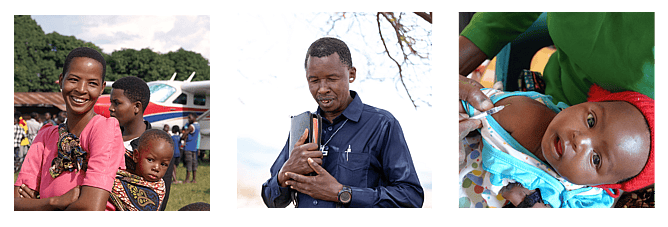
‘I’m happy to know that my child’s health is progressing well. Her weight is 8.9 kg – a huge difference from last month when she was only 7.4 kg! Everyone needs medical services,’ says Miriam.
From Haydom Hospital, it only takes the team approximately 15 minutes by air to reach the regional villages. For patients in need of urgent emergency care, MAF’s medevacs to hospital have been a life-saver.
And who can forget Elisha Moita – Maasai evangelist and founder of Malambo Bible College in northern Tanzania? When Elisha began sharing the Gospel during the late 1970s amongst the Maasai, he counted only 63 Christians – today there are over 200,000 (source: Joshua Project).
For over 40 years – to avoid dirt tracks and bad roads - Elisha and his team of evangelists would fly with MAF every month to reach isolated Maasai villages and spread the Good News. Elisha remembers their small beginnings.
‘Some villages were so remote, but with MAF, our evangelists reached people more easily without too much energy, and preached the Gospel. Before, walking so many hours was difficult. With MAF, we had the strength to sit and talk to people because we weren’t tired,’ recalls Elisha.
As effective as MAF’s ministry has been in Tanzania, access to essential services has grown, and it’s time to pivot to support a greater need – Sudan’s refugee crisis.
Since the Sudan War erupted in April 2023, some 14 million people have been displaced. Over 1.3 million Sudanese have fled to Chad and another 600,000 have fled to South Sudan (source: UNHCR) – two countries where MAF operates.
In response, Norman Baker, MAF International’s Chief Transformation and Operating Officer, says we must reallocate our resources to save even more lives.
‘We have established a strong case for focusing our operations in South Sudan and Chad to address the Sudan crisis – the world’s biggest humanitarian crisis - as a strategic organisational priority,’ explains Norman.
MAF would like to thank supporters who have made decades of transformation in Tanzania possible.
STORY / CLAIRE GILDERSON PHOTOS / ANNET NABBANJA, PONTUS DANFORTH, SVIEN ROBERT SOLBERG & JEAN BIZIMANA
This story was originally published in "Flying for Life - Winter 2026." To view the full issue, click here.